the preparation loop.
There is a specific type of person who knows more about how to start the thing than most people who have actually started it.
They have watched the videos. They have read the books. They have the tabs open, the notes organized, the research done. Ask them about the thing they want to do and they can speak about it with genuine fluency; the obstacles, the best approaches, the mistakes to avoid. From the outside it looks like someone who seriously understands it.
They are not close. They have been not close, and they probably won't ever be close
This is the preparation loop. And it is not laziness, it is not procrastination in the way most people use that word, and it is not a lack of motivation. It is the brain's most sophisticated response to something most people have never examined in themselves: low self-efficacy in a specific domain.
Self-efficacy is not confidence. Confidence is a feeling: diffuse, fluctuating, responsive to mood and circumstance. Self-efficacy is a belief. Specifically, it is your belief in your ability to execute a specific behavior in a particular situation. You can feel confident and have low self-efficacy in a domain. You can have high self-efficacy and feel unconfident on a given day. They are not the same thing and treating them as the same thing is why most confidence advice fails to produce the change it promises.
The preparation loop is a self-efficacy problem. Which means it cannot be solved by feeling more confident, by finding more motivation, or by preparing more thoroughly. It can only be solved by one thing and the loop is specifically designed to avoid that thing.
Psychologist Albert Bandura identified four sources of self-efficacy. Vicarious experience, which is watching someone similar to you succeed. Verbal persuasion, which is being told by someone credible that you are capable. Physiological state, which is how your body feels going into the attempt. And mastery experiences. Doing the thing, at any scale, and surviving it.
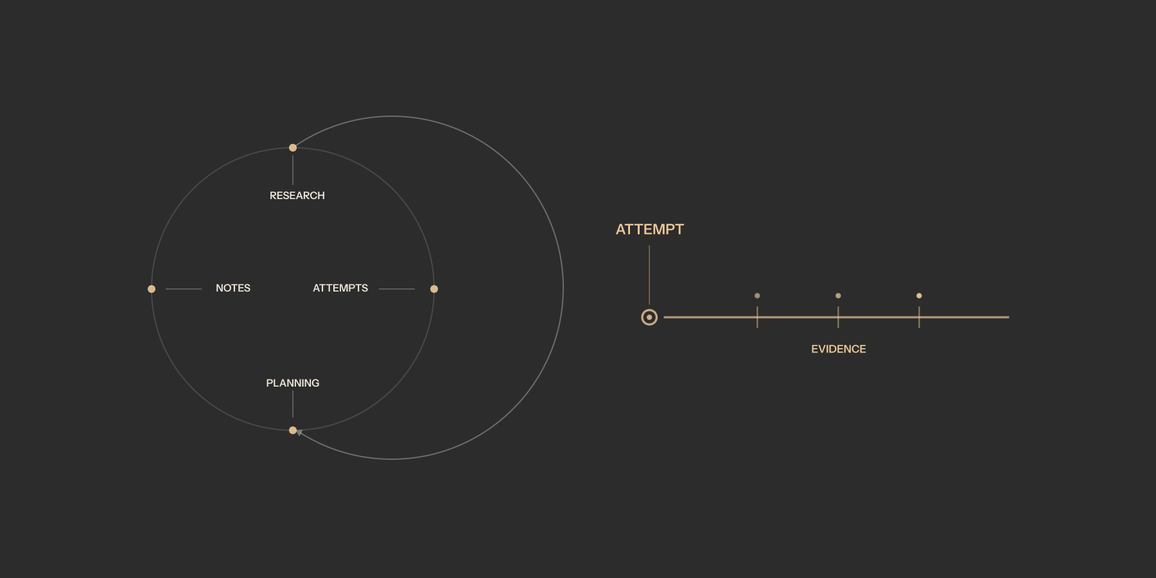
Mastery experiences are the only source that compounds. Every other source produces a temporary adjustment to your belief. A mastery experience produces evidence. And evidence, accumulated over time, becomes the foundation that all genuine self-efficacy is built on.
The preparation loop avoids mastery experiences entirely. It produces vicarious experiences; you watch people do the thing. It sometimes produces verbal persuasion and you read about people who believed in themselves and succeeded. But it never produces the one thing that actually builds the belief. Because building the belief requires the attempt. And the attempt requires accepting that you might find out you're not as capable as you hoped.
That is the function the loop is serving. It is not inefficiency. It is protection. The brain has found a way to feel like it is moving toward the thing while deferring the moment that would generate real information about whether you can actually do it.
Consider learning a language. Watching a thirty minute video in English about the best methods for learning French is not learning French. It is learning about learning French. The brain does not reliably differentiate between the two because both feel like engagement with the subject. Both feel like progress. One of them is. The other is the loop sustaining itself.
What breaks it is not more preparation. It is the smallest possible action that generates real feedback from the actual domain. Not input but output. Speaking one sentence in French badly, in front of someone, is worth more to your self-efficacy than ten hours of watching other people speak it fluently. Not because the sentence was good. Because you now have evidence that you attempted and survived. That evidence is the deposit. Every subsequent attempt builds on it.
The first attempt is the most expensive investment you will make. Every one after that gets cheaper. This is why people who start things, even badly, even imperfectly tend to keep going while people who prepare tend to keep preparing. The starting produces the belief that sustains the continuing. The preparing produces more comfort with preparing.
The question worth sitting with is not whether you are ready. You are probably not ready. Nobody is ready the first time they do anything worth doing. The question is what is the smallest version of the thing you could do today that would produce one piece of real feedback, not about the idea of the thing, but about your actual ability to do it.
That one piece of feedback is worth more than everything currently in the tabs you have open.