the difficulty anchor
I run in the morning. I want to be clear about why because it has nothing to do with the reasons most people run.
I don't do it because I enjoy it. I don't do it because I'm trying to get healthier or hit a goal or build a habit I'm proud of. I do it because it's the one thing in my life that is accessible enough that I can't talk myself out of it and difficult enough that my brain genuinely resists starting it every single time.
That combination is the point. Not the running.
The problem with easy days
Think about what a normal day looks like without anything genuinely difficult in it. You go to work. You handle tasks. You come home, make dinner, do the dishes, decompress. Nothing in that sequence is objectively hard. But by the end of it, you might feel like you ran a marathon.
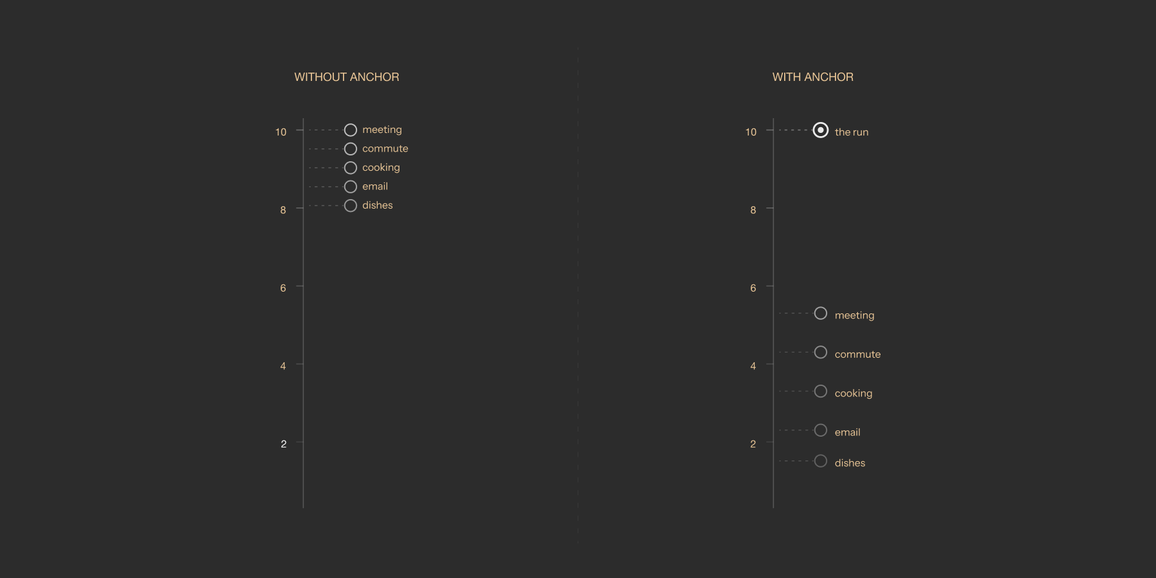
Without a real anchor for difficulty, everything that happens fills the available space and gets perceived as maximally hard. If the most difficult thing you did was sit through a long meeting, that meeting becomes a 10. Getting home and having to cook after a long day becomes a 9. A slightly frustrating email becomes an 8.
The scale isn't calibrated. It's just relative to whatever happened. And when everything is relative to everything else, everything feels harder than it is.
What the difficult thing actually does
When you do something genuinely difficult early, something your brain resists, something that requires you to override your own reluctance, you set the actual scale for the day.
Now the meeting is a five. Cooking is a four. The frustrating email is a three. Not because those things changed. Because you have a real reference point that puts them in proportion.
This is why it has to be something you don't enjoy. The enjoyment is what collapses the difficulty. I can push myself hard in the gym and not get this effect because I've been doing it long enough that I find genuine satisfaction in it. The threshold for difficulty there is high enough that to actually fight my mind I'd need to do something extreme, which requires more time, more logistics, more variables that could become reasons not to do it.
Running is accessible. I can be outside in thirty seconds. There's no drive, no equipment, no setup. The gap between deciding to do it and doing it is small enough that I can't fill it with excuses. And I still don't want to do it every time. That resistance is the thing I'm looking for. That resistance is what makes it work.
Why morning specifically
The later in the day you push it, the more variables accumulate that can become reasons not to do it. You get tired. Something comes up. The window closes. You tell yourself you'll do it tomorrow.
More importantly, the calibration effect only works if the anchor comes before the things you're trying to calibrate. A difficult thing at the end of the day doesn't reframe what already happened.
Do it first. Before the day has asked anything of you. Before the variables have had a chance to stack up. Before your brain has built a case for why today is the day you skip it.
What skipping it actually feels like
On the days I don't run I notice the difference almost immediately. The friction that normally doesn't register starts showing up. Small things feel like resistance. Tasks I'd normally move through without thinking start accumulating a kind of weight they don't deserve.
Nothing about those days is objectively harder. The calibration just isn't there. The most difficult thing that happens becomes the anchor for the whole day by default — even if it wasn't actually difficult. Even if it was just a slightly uncomfortable conversation or a task that required more focus than usual.
Without the anchor, everything inflates. The scale goes up and stays up. And by the end of the day the things that were genuinely easy feel like they cost something.
Finding your version of it
The running is mine. Yours will be something different. The criteria are simple: it has to be accessible enough that you can't argue yourself out of it, and difficult enough that your brain genuinely resists it every time.
It doesn't have to be physical. It has to be real. Something that requires you to override your own reluctance and do it anyway. That override is what sets the scale. That override is what the rest of the day gets measured against.
Do it before your day starts. Everything after that will feel different not because it got easier, but because you know what hard actually is.
New articles every week at jackxwil.com. If this was useful, send it to someone who needs it.