
how to build high agency.
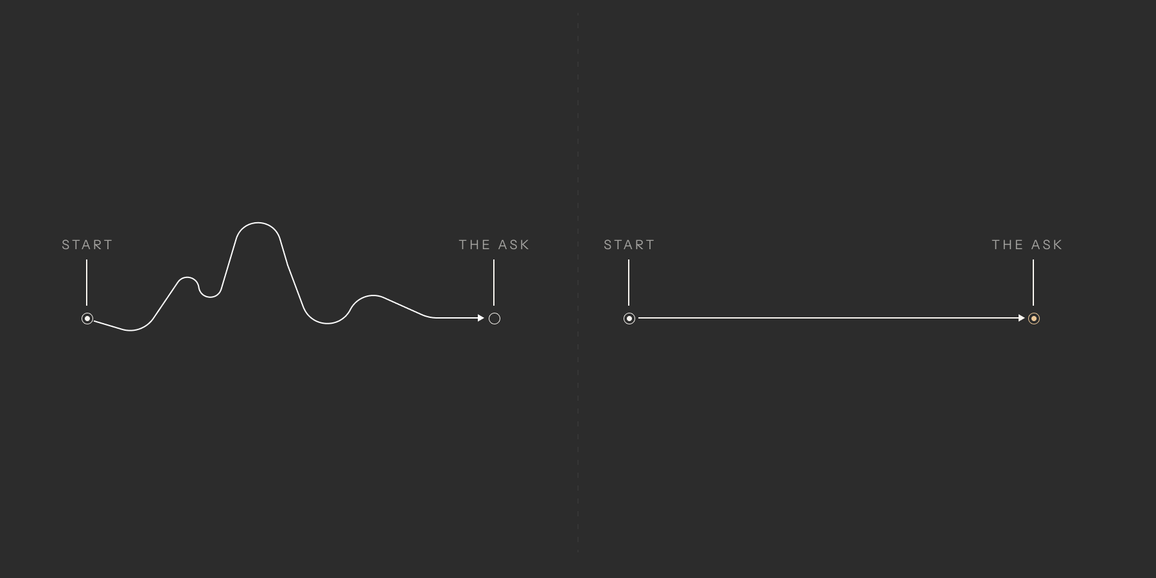
There's a specific type of person you've probably encountered.
They don't seem to wait for things. When something goes wrong they're already thinking about what to do next. When they want something they ask for it directly. When they're wrong about something they update and move on without making it a whole thing. When the conditions aren't what they want them to be, they work within them rather than waiting for them to improve.
From the outside it can look like confidence, or drive, or some kind of temperament you either have or don't. It isn't any of those things. It's a belief, one specific belief, and a set of behaviors that follow from it.
The belief is this: what I do influences what happens to me.
What high agency actually is
High agency isn't a personality type. It isn't hustle. It isn't aggression or relentless optimism or the refusal to acknowledge difficulty.
It's an orientation. Specifically it's the internal orientation, the working assumption that your actions are a meaningful variable in how your life unfolds. The opposite isn't laziness. The opposite is the external orientation: the unconscious belief that outcomes are primarily determined by circumstances, other people, timing, luck. Things outside your reach.
Most people have never examined which one they're operating from. They experience their orientation as just the way things are, the obvious, accurate read on how the world works. The internal orientation person looks at a closed door and asks what they can do. The external orientation person looks at the same door and explains why it's closed.
Both might be right about the door. Only one of them is going to find out what's on the other side.
The psychologist Julian Rotter named this distinction in 1954. He called it locus of control, the degree to which you believe outcomes are controlled internally by your own effort and decisions, or externally by environment and circumstance. Decades of research have shown that people with a more internal locus consistently outperform people with a more external one across almost every measurable domain: health, career, relationships, recovery from setbacks.
Not because they're more talented. Because the belief changes the behavior. And the behavior changes the outcome.
Why most people don't develop it
Here's something worth naming honestly: for a lot of people, the external orientation wasn't a mistake. It was a rational response to an environment where they genuinely didn't have much control. The belief formed correctly given the evidence available at the time.
The problem isn't that the belief formed. The problem is when the environment changes and the belief doesn't update.
You're no longer in the environment that produced the belief. But the belief is still running. Still telling you that waiting is prudent, that conditions need to improve before you can move, that other people's approval is required before you can start. Still generating very reasonable explanations for why now isn't quite the right time.
The explanations are often accurate. The obstacles are usually real. What's worth examining is whether removing them is actually the precondition for starting, or whether starting is the thing that begins to remove them.
What it looks like in behavior
This is where it gets useful. Because high agency isn't just a belief you hold. It shows up in specific observable behaviors. Once you know what to look for you'll start seeing it everywhere.
In how people communicate. Put two people in the same situation making the same request. One pre-apologizes, hedges, softens the ask until it barely has a surface to land on. "I know you're probably busy, I'm so sorry to bother you, would it maybe be okay if..."
The other assumes forward motion and coordinates logistics. "I'm planning to take Friday off, does anything need to move?"
Same request. Completely different signal. The phrasing tells the other person whether you expect to get what you're asking for. And people match that expectation almost every time.
Low agency communication is designed to protect you from rejection. High agency communication is designed to move something forward. Those are different goals and they produce different results.
Count the words before the actual ask. If there are more words of softening than words of ask, that's the pattern running.
In how they handle being wrong. High agency people update and move. When new information arrives that contradicts their position they change the position. No defensiveness. No identity cost. No need to find a way to be technically right about something adjacent.
They can do this because they've separated their beliefs from who they are. Being wrong is just data. The position changes. They keep going.
The person who can say "you're right, I hadn't thought about it that way" without it costing them anything is almost always the most capable person in the room. Not because they're always right. Because they're not spending energy protecting a position they already know is wrong.
In how they respond when conditions aren't ideal. High agency people don't wait for the right moment. They identify what's available right now and work within those constraints.
The low agency version has a very good, very reasonable explanation for why now isn't the right time. The explanation is usually accurate. The conditions really aren't ideal. And yet somehow the conditions never become ideal enough to start.
The obstacle is real. What's different is what they do with it. One person treats the obstacle as a variable, something to work within, around, or through. The other treats it as the conclusion. The same information produces different behavior depending entirely on the orientation you're running.
Where to start
Don't try to overhaul the whole thing at once. Start with the most visible behavior because visibility is the precondition for change.
For one day, catch every time you pre-apologize before making a request. Don't fix it yet. Just notice it. You can't change a behavior you haven't seen. One day of noticing is where this starts.
Then notice what happens when you're wrong about something. Notice whether your first instinct is to update or defend. You don't have to change the instinct immediately. Just see it.
Every time you catch the pattern and do something different, make the direct ask, update the position, move within the constraint instead of waiting for it to lift, you're making a deposit. The deposit is evidence. Evidence that you're the kind of person who operates this way. And that evidence, accumulated over time, becomes the foundation that everything else gets built on.
High agency doesn't arrive fully formed. It gets built one decision at a time, in small moments where you could have waited or softened or explained it away.
And you didn't.
If this was useful, forward it to someone who would appreciate it.